What is Tenex?
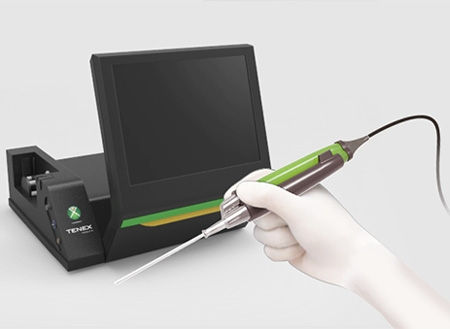
Tenex is a technology that uses ultrasonic energy to remove diseased tissue, calcifications and bone spurs from damaged tendons. The device is the shape and size of a pen, with a tip just a few millimetres across.
How long has it been used?
Clinical use began in the USA in 2010 with Professor Bernard Morrey of the Mayo Clinic, initially for tennis elbow, and gradually spread to many tendinopathies. To date more than 200,000 patients worldwide have had it for persistent tendinopathy.
Which conditions does it treat?
- Achilles tendon
- Patellar tendon
- Tennis elbow
- Calcific tendinopathy of the shoulder
- Plantar fasciitis / heel spur
- Trochanteric pain
When is it recommended?
It is a minimally invasive treatment for cases where conservative care (medication, physiotherapy, injections) has failed. Its aim is to replace open surgery for many patients.
Does it work?
Tenex is successful in 85% of patients. Your doctor will explain whether your case is suitable. The aim is for most patients with persistent tendinopathy to become pain-free without open surgery.
The procedure
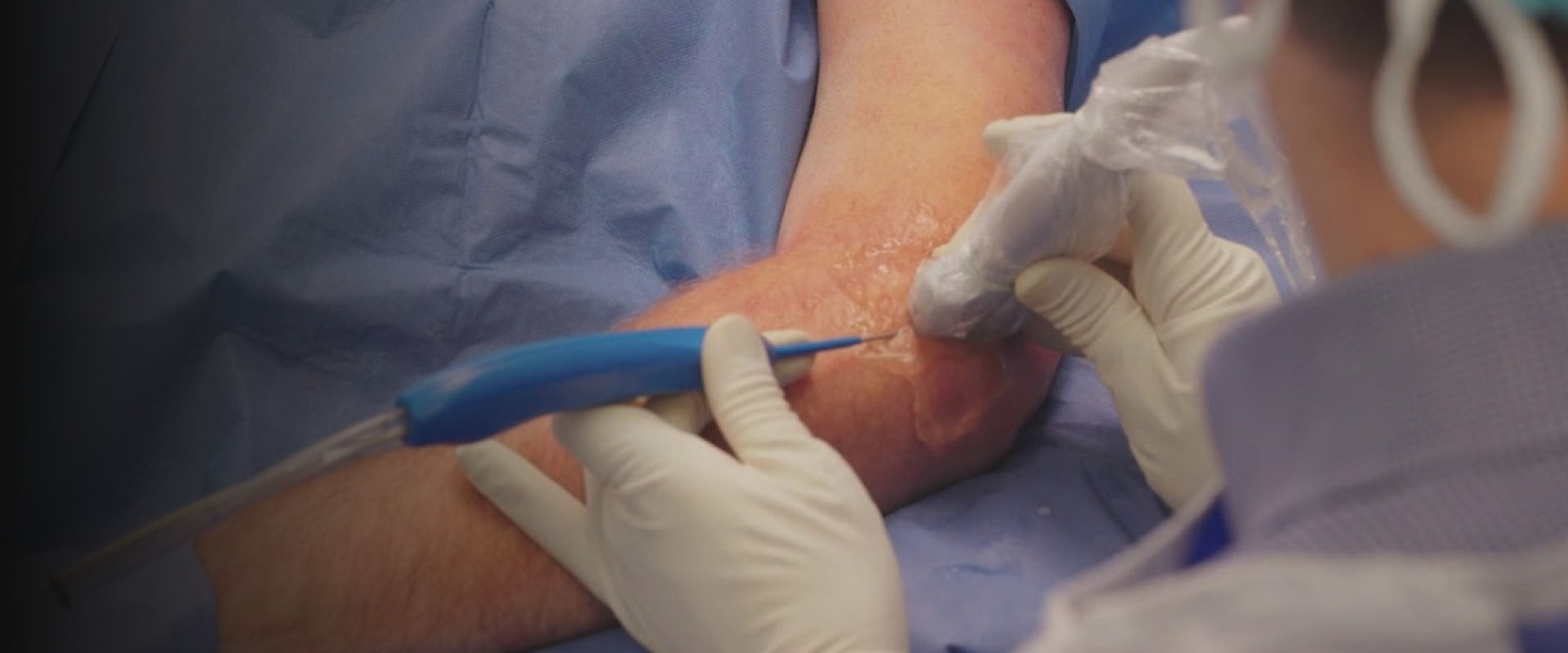
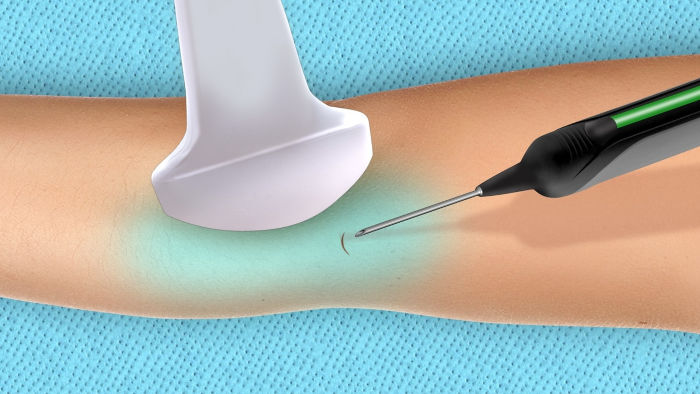
It can be done in hospital or in a well-equipped clinic. Under local anaesthetic and in a sterile field, an incision of a few millimetres is made. Guided by ultrasound, the device’s tip is directed to the damaged area and, with its oscillating tip, removes — depending on the problem — diseased tendon tissue, calcifications, bone spurs and inflamed bursae. The device runs for just a few minutes; the whole procedure takes 30–40 minutes. Finally an adhesive strip and a bandage (no stitches) are applied and you go home.
What exactly does it remove?
Only the diseased areas that cause symptoms, without affecting the rest of the tendon:
- Diseased tendon tissue.
- Calcifications.
- Bone spurs.
- Inflamed bursae.
Advantages
- No hospital stay or general anaesthetic; done under local anaesthetic and painless.
- Removes tendon damage just as open or arthroscopic surgery would.
- Much faster recovery than any operation.
- Very safe, with fewer risks than open or arthroscopic surgery.
- Suitable for most cases of persistent tendinopathy.
Preparation
No special preparation is needed. You should take your usual medication (if any) and eat normally.
Risks
It is a very safe procedure, with clearly fewer complications than open surgery; the risk of a serious complication is just 0.03%. Mild local swelling for 48–72 hours is common, so rest, elevation (for the leg), ice and possibly anti-inflammatories are advised. A small bruise may appear, especially if you take anticoagulants, and fades in 1–2 weeks. The risk of infection is very small; precautions such as a sterile environment and preventive antibiotics are taken. No cases of thrombosis have been reported, thanks to the minimal intervention and immediate mobilisation.
After treatment
- You walk out, but for safety someone else should drive you home.
- Two days of rest are advised, with painkillers and antibiotics as instructed.
- Return to office work after two days.
- Driving: after 24–48 hours for the arm (shoulder, elbow); perhaps 1–2 weeks for the leg.
- Improvement comes gradually over 4–6 weeks; physiotherapy may be needed.
- Full sport or heavy manual work may take 2–3 months.
Tenex videos by condition
General patient information: tenexhealth.com
This information is for general guidance and does not replace a medical consultation. The right treatment is always decided individually, after clinical assessment.