What is it?
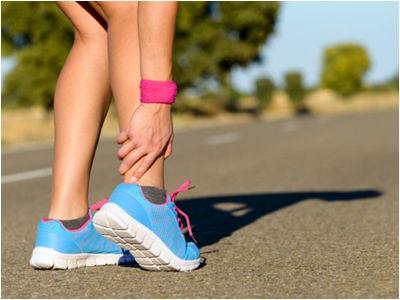
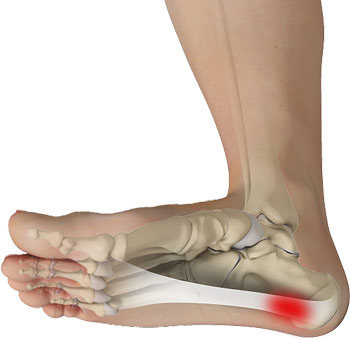
It is the commonest cause of pain under the foot: inflammation of a band of connective tissue joining the heel to the toes (the plantar fascia). Sometimes a bony spur grows from the heel — the heel spur. It causes sharp pain with the first steps each morning or on standing up after sitting; after a few steps the pain usually eases, returning after long periods of standing or walking.
Who gets it most?
- People aged 40–60.
- Sports that load the sole: running, dance, aerobics.
- Unsupportive footwear that doesn’t hold the arch.
- Flat feet or high arches.
- Higher body weight.
- Jobs involving long hours standing or walking on hard surfaces (labourers, teachers and others).
Treatment
The condition usually settles over weeks or months. Less standing and walking, shoes that support the arch (trainers are usually suitable), stretching and massaging the sole, ice and anti-inflammatories as directed by your doctor are advised. If symptoms persist: physiotherapy, night splints, custom insoles (usually after a foot-pressure analysis) or a cortisone injection — more successful when ultrasound-guided.
Persistent and recurring cases
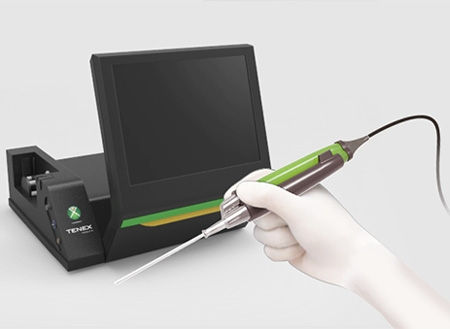
In the few cases where conservative care fails, a procedure is needed to clean out the diseased part of the fascia (usually its inner part). Today this is done with Sonosurgery, without a surgical incision.
The procedure
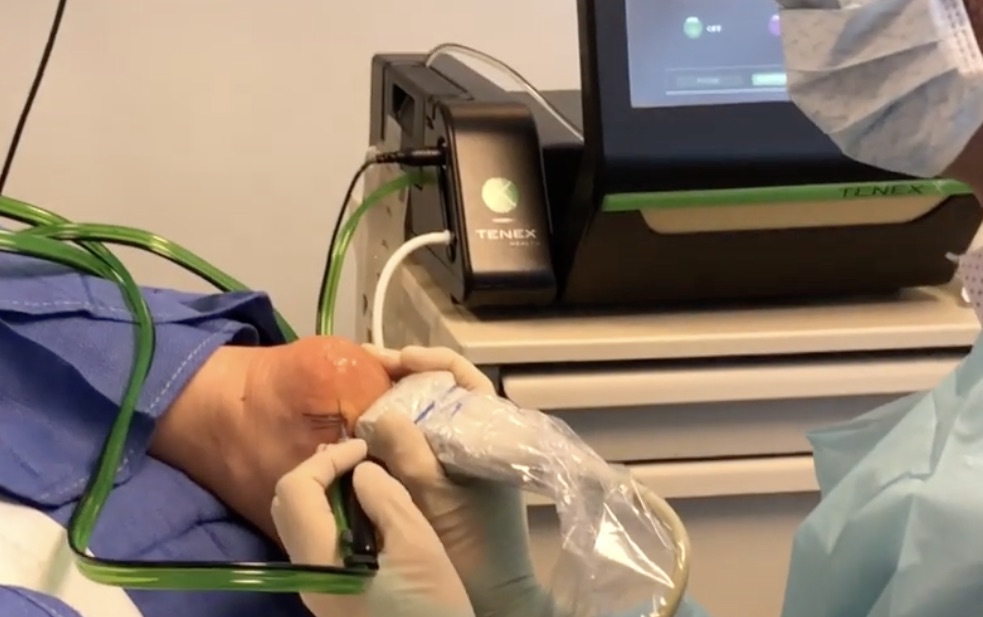
It can be done in hospital or in a well-equipped clinic. Under local anaesthetic the treatment is painless. Ultrasound locates the damage and, through the skin — with no incision or a tiny one — special micro-instruments (needles, rasps) clean the area. It is over in a few minutes.
Advantages
- No general anaesthetic; painless under local.
- No surgical incision.
- Quick (20–30 minutes in total).
- Much faster recovery than surgery.
- Lower cost, as it can be done in the clinic.
Before the procedure
- You may eat up to two hours before.
- Continue your medication, except anti-inflammatories (stop three days before) and anticoagulants (only if your doctor agrees).
- Arrange not to drive home.
After the procedure
- Painkillers if needed; antibiotics only if you are at high risk of infection.
- A bandage for 24–48 hours; walking immediately, perhaps with an aid (crutches, a stick) for 1–2 days.
- You can get the foot wet after 48 hours.
- Driving in 7–10 days; office work in 2–3 days.
- Work involving walking and physical effort in 3–6 weeks.
- Gradual return to sport after six weeks.
This information is for general guidance and does not replace a medical consultation. The right treatment is always decided individually, after clinical assessment.