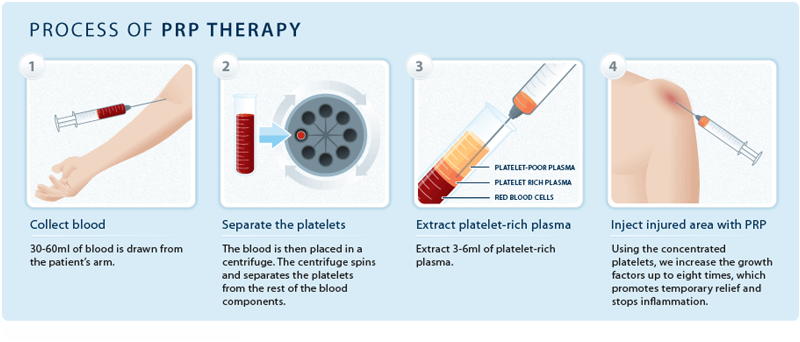
According to the report (New York, 17 August 2011), blood injections — especially of platelet-rich plasma — into the affected area relieve the pain of tennis elbow where other treatments have failed.
The study
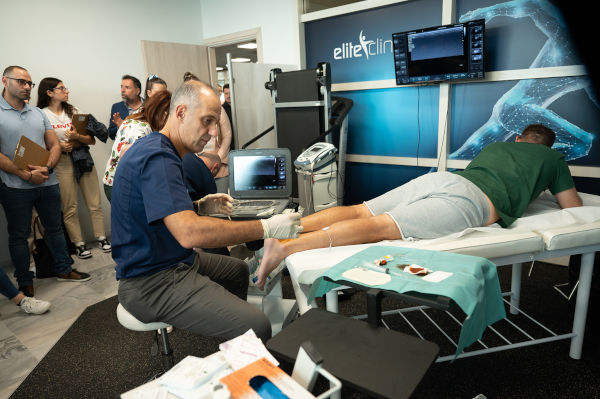
Dr Thanasas’s team at Henry Dunant Hospital compared a single ultrasound-guided local injection of PRP with an injection of autologous blood in 28 patients with lateral epicondylitis.
- At 6 weeks, pain scores (VAS) improved by a mean 3.8 points (61.5%) in the PRP group, against 2.5 points (41.6%) in the autologous blood group.
- Both groups improved further at 3 and 6 months, with no significant difference between them.
- The findings were published in The American Journal of Sports Medicine.
"There is now a solution for patients suffering from unrelenting tennis elbow. PRP is probably the best treatment for chronic refractory lateral epicondylitis if it is used after classical types of treatment — rest, braces, anti-inflammatories, cortisone injections or physiotherapy — have all failed." — Dr Christos Thanasas to Reuters Health
Surgery remains the last resort. As Dr Thanasas noted, whole-blood treatment is a good alternative in remote areas or in health systems that do not fund PRP, and further studies are needed to establish how and when PRP is most effective.
Source: Reuters, 17 August 2011 — reporting by Will Boggs.
This information is for general guidance and does not replace a medical consultation. The right treatment is always decided individually, after clinical assessment.