What is it?
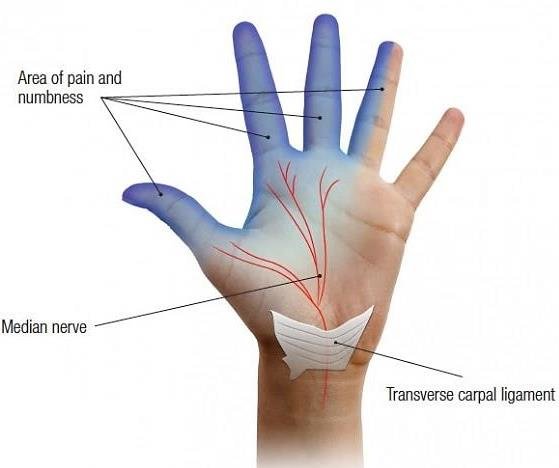
A common condition causing pain, numbness and weakness in the hand, usually worse at night. It is caused by pressure on an important nerve, the median nerve, at the wrist. It usually appears in middle age (40–60). In many patients symptoms worsen over time, so early diagnosis and treatment matter; untreated, it can lead to permanent numbness and weakness of the hand.
What causes it?
The carpal tunnel is a narrow passage at the base of the palm through which nine tendons and the median nerve pass. Its "floor" is the small bones of the wrist and its "roof" a strong band, the transverse carpal ligament. The nerve runs through this space to the thumb, index, middle and part of the ring finger. Causes of compression include:
- Anatomy (a narrower tunnel).
- Manual work or prolonged poor wrist position (bent back or forward).
- Hormonal changes (menopause, pregnancy, thyroid disease, diabetes).
- Rheumatological disease.
First-line treatment
Activity modification (rest), a splint and a local cortisone injection under ultrasound for maximum safety and effectiveness. If conservative treatment fails, surgery is recommended.
Classic surgery
In open surgery an incision is made at the base of the wrist and the transverse ligament is divided to free the nerve; endoscopic surgery uses one or two small incisions. Night pain settles very quickly, while full recovery may take weeks or months. Success is high and complications rare; the commonest is pain around the incision and a tender scar, which usually fade within a few months. Others include infection, wound breakdown, haematoma and, very rarely, injury to the nerve or one of its branches.
Sonosurgery: no surgical incision
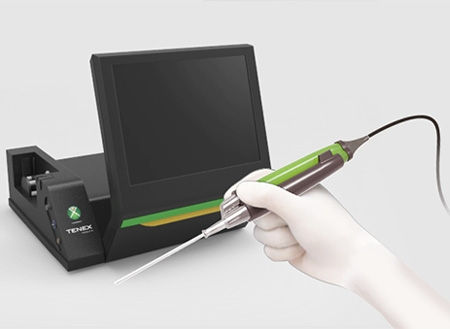
Today the transverse ligament can be divided without an incision, giving the same definitive result. In hospital or a well-equipped clinic, under local anaesthetic and continuous ultrasound guidance, a needle is placed and a special thread is passed through it. The thread loops around the transverse ligament and cuts it, freeing the median nerve. Operating time is about twenty minutes.
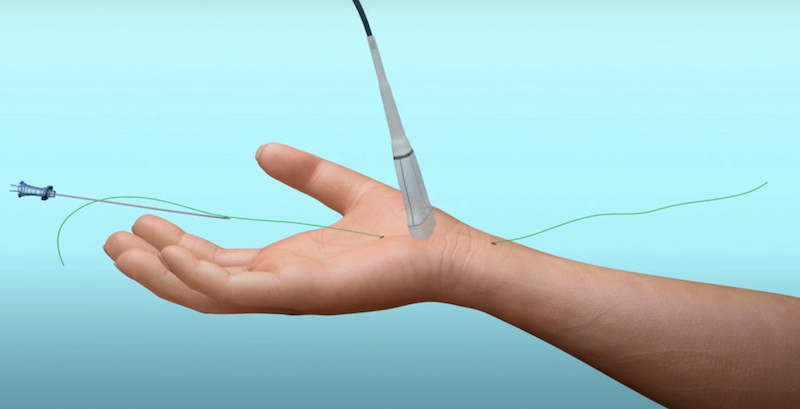
In about 10% of cases the procedure is converted to classic open surgery, when the ligament is too tough to divide through the skin.
Advantages
- A definitive treatment.
- Painless under local anaesthetic.
- No incision or stitches — and none of the problems that come with them.
- Fewer complications.
- A rapid return to full activity.
Before the procedure
- You can eat normally.
- Continue your medication, except anti-inflammatories (stop three days before) and anticoagulants (only if your doctor agrees).
- A bandage will be placed around the hand at the end.
- Arrange not to drive home.
After the procedure
- Simple painkillers if needed; antibiotics only with risk factors (e.g. diabetes).
- A bandage for 24–48 hours; move your fingers straight away.
- You can get the hand wet after 48 hours.
- Office work and driving in 24–48 hours.
- Demanding manual work in 2–3 weeks.
This information is for general guidance and does not replace a medical consultation. The right treatment is always decided individually, after clinical assessment.