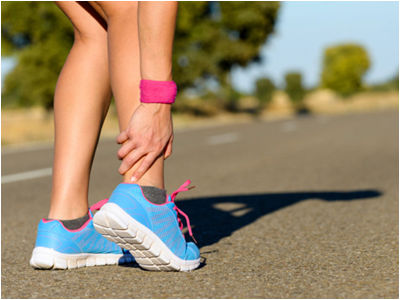
The Achilles tendon connects the calf muscles to the back of the heel. It works continuously when we walk or run: with every step it stores energy as it stretches and releases it in the contraction that follows. Although it withstands very high loads, its structure can change — a condition we call tendinitis or, more accurately, tendinopathy.
Achilles tendinopathy is often stubborn. It can trouble patients for months or years, restricting sport as well as daily activities such as walking or climbing stairs.
Causes
The two most important factors are overload of the tendon and increasing age. It is usually due to:
- Repetitive overload, e.g. excessive training without rest days, repeated jumping or uphill running.
- A sudden increase in activity (distance or intensity of walking or running) that gives the tendon no time to adapt.
- "Tight" Achilles tendons and calf muscles.
- Excessive pronation of the foot.
- Unsuitable footwear that neither supports the foot nor absorbs shock.
- Age: over the decades the tendon’s resilience and elasticity decline.
- Certain rheumatological conditions.
- Less often, a direct blow to the tendon.
What changes inside the tendon
In the acute phase there may be diffuse, painful swelling of the tendon and its sheath (the paratenon), as well as swelling of the bursae — small sacs that reduce friction between skin, tendons and bony prominences. Inflammatory cells and mediators are present, with pain on walking and possibly at rest, tenderness, swelling and sometimes crepitus.
In the chronic phase the structure of the tendon itself changes: disorganised collagen fibres, more proteoglycans, fewer cells, fibrocartilage, calcifications and bone spurs, along with new blood vessels and nerves — including pain-carrying nerve endings. The tendon loses its fibro-elastic properties and its ability to store and return energy. These changes are hard to reverse.
Two types of tendinopathy
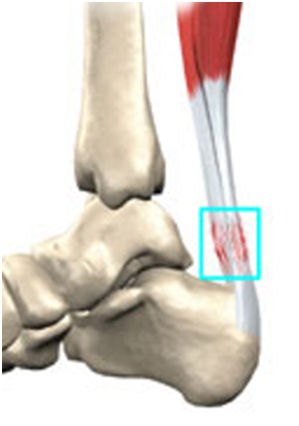
Non-insertional (mid-portion)
The middle part of the tendon is affected. It usually occurs in younger, active people.
Insertional
The lowest part of the tendon is affected, where the Achilles attaches to the heel. It affects active and less active people alike, also occurs in rheumatological disease, and is most common between the ages of 45 and 55.
Symptoms
- Pain and stiffness during the first steps in the morning or after sitting.
- Pain after walking or exercise, or during it.
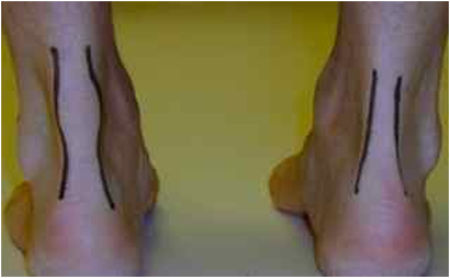
- Thickening of the tendon.
Diagnosis
The doctor takes a history and examines the area. The diagnosis is usually straightforward, although X-rays, ultrasound or MRI may be needed.
Possible complications
- Painful swelling.
- Micro-tears of the fibres.
- Calcification (calcium deposits).
- A bone spur on the surface of the heel.
- Rupture of the tendon, which requires surgical repair.
Treatment
This tendinopathy often becomes chronic, especially if it is not treated within the first few weeks. In the early stage, simple measures are often enough: activity modification, physiotherapy and medication. Many patients, however, ignore the first symptoms and seek help months later, once the damage is established; treatment then has to be multifactorial and may take weeks or months.
Treatment may include:
- Reducing the load on the tendon, and ice.
- Anti-inflammatory medication.
- Orthotic insoles, temporary or permanent (to raise the heel or support the arch).
- Exercise: isometric exercises first to reduce pain, then a progressive, individualised programme.
- Physiotherapy (ultrasound, TENS, iontophoresis, exercise therapy, massage).
- Shock wave therapy to reduce pain, increase blood flow and promote healing.
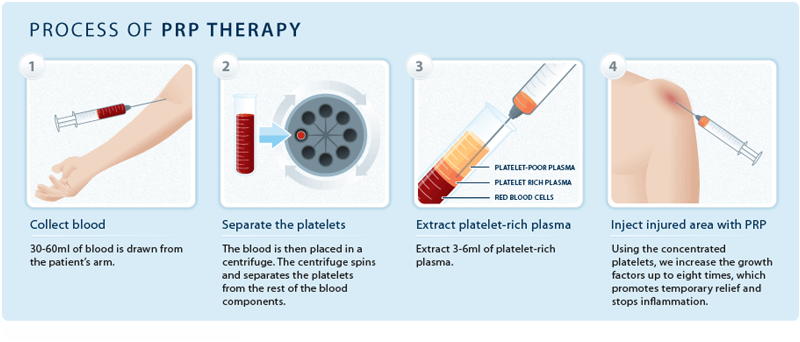
- PRP and stem cell injections.
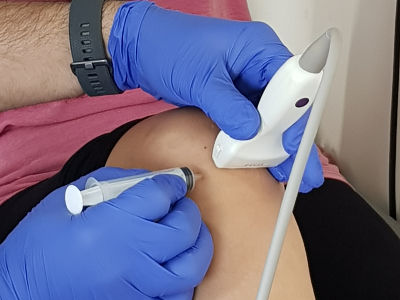
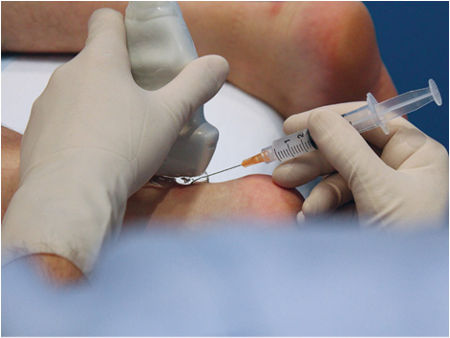
- High-volume injection: saline injected under ultrasound guidance to destroy the abnormal pain-carrying nerve endings.
- Electrolysis: an electrical stimulus delivered under ultrasound guidance to the damaged area to make it heal.
- Sonosurgery: a micro-procedure under local anaesthetic and ultrasound guidance to remove painful calcifications, bone spurs and bursae.
- Open surgery: release or partial division of the gastrocnemius, debridement and repair of the tendon, or tendon transfer.
Which treatment is right for you
Treatment depends on how severe the condition is, your own demands and the treatments already tried. Achilles tendinopathy is not easy to treat; it takes experience and teamwork, and different interventions are usually combined for the best result. The treatment proposed is always tailored to the individual.
Recurrence
Recurrence can be avoided once the factors that caused the problem have been removed.
This information is for general guidance and does not replace a medical consultation. The right treatment is always decided individually, after clinical assessment.