What is tennis elbow?
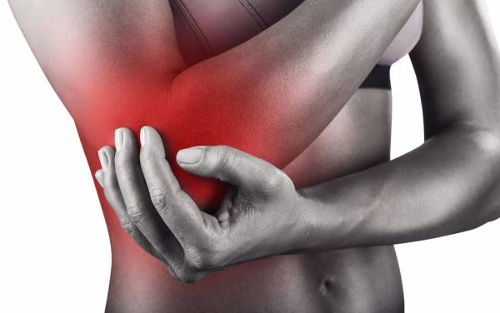
It is a tendinopathy on the outside of the elbow, in the extensor carpi radialis brevis (ECRB) tendon, which arises from the lateral epicondyle — hence "lateral epicondylitis". It appears between 30 and 60, due to overload in sport, manual work and also office work, when the wrist takes repetitive loads. Read more about tennis elbow.
Treatment
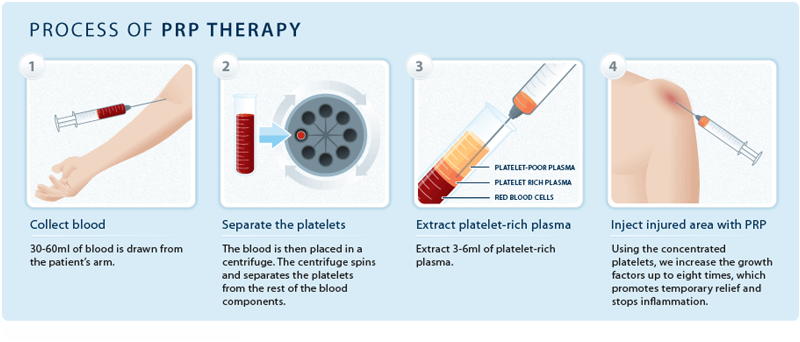
First: activity modification, specific exercise, an elbow brace, physiotherapy and ultrasound-guided injections (cortisone, PRP, electrolysis). The condition often lasts a long time — from a few months up to two years — but is self-limiting, meaning it usually settles on its own. Some patients, however, suffer persistent and recurring pain that affects daily life.
When is surgery needed?
When pain persists after six months of conservative treatment. Treatment is individual: if a patient makes no progress at all, it may be recommended sooner. Traditionally the operation was done open or, less often, arthroscopically, to clean out and remove the diseased part of the tendon, with a very high success rate.
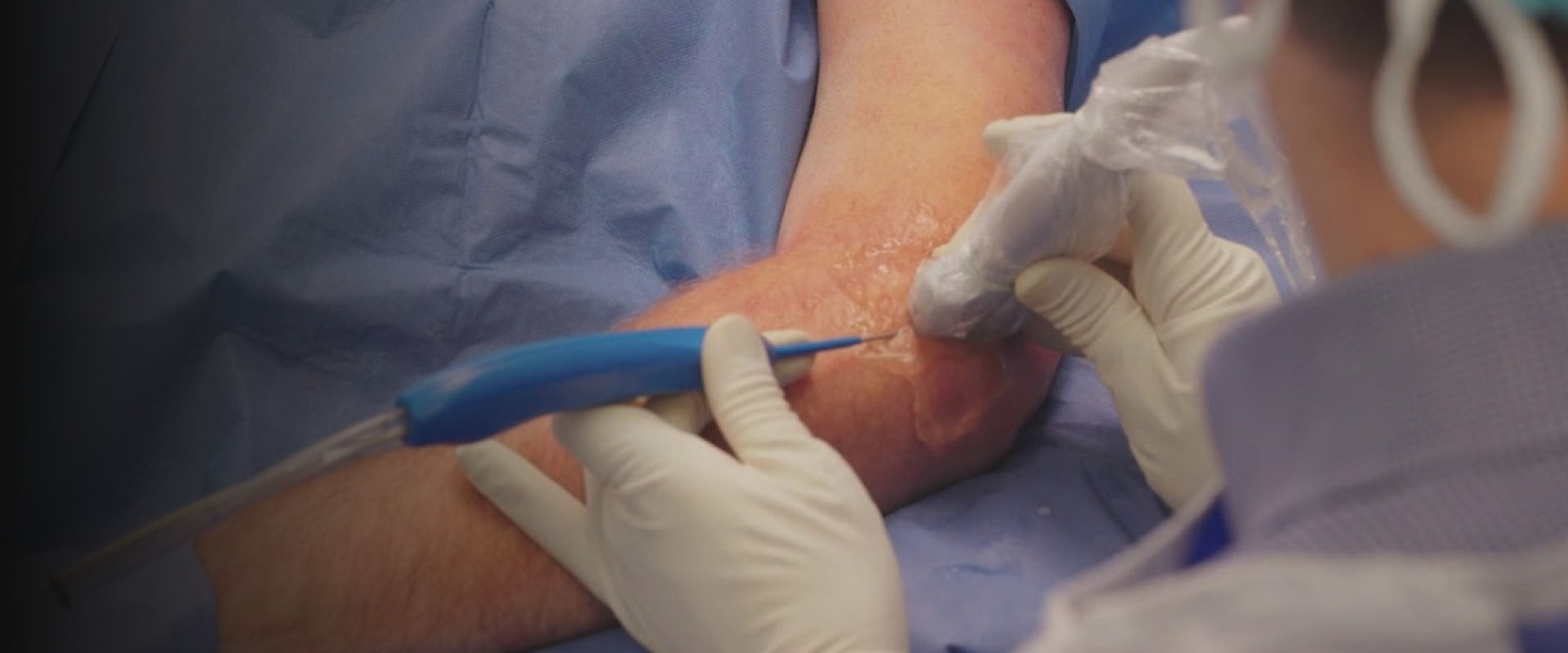
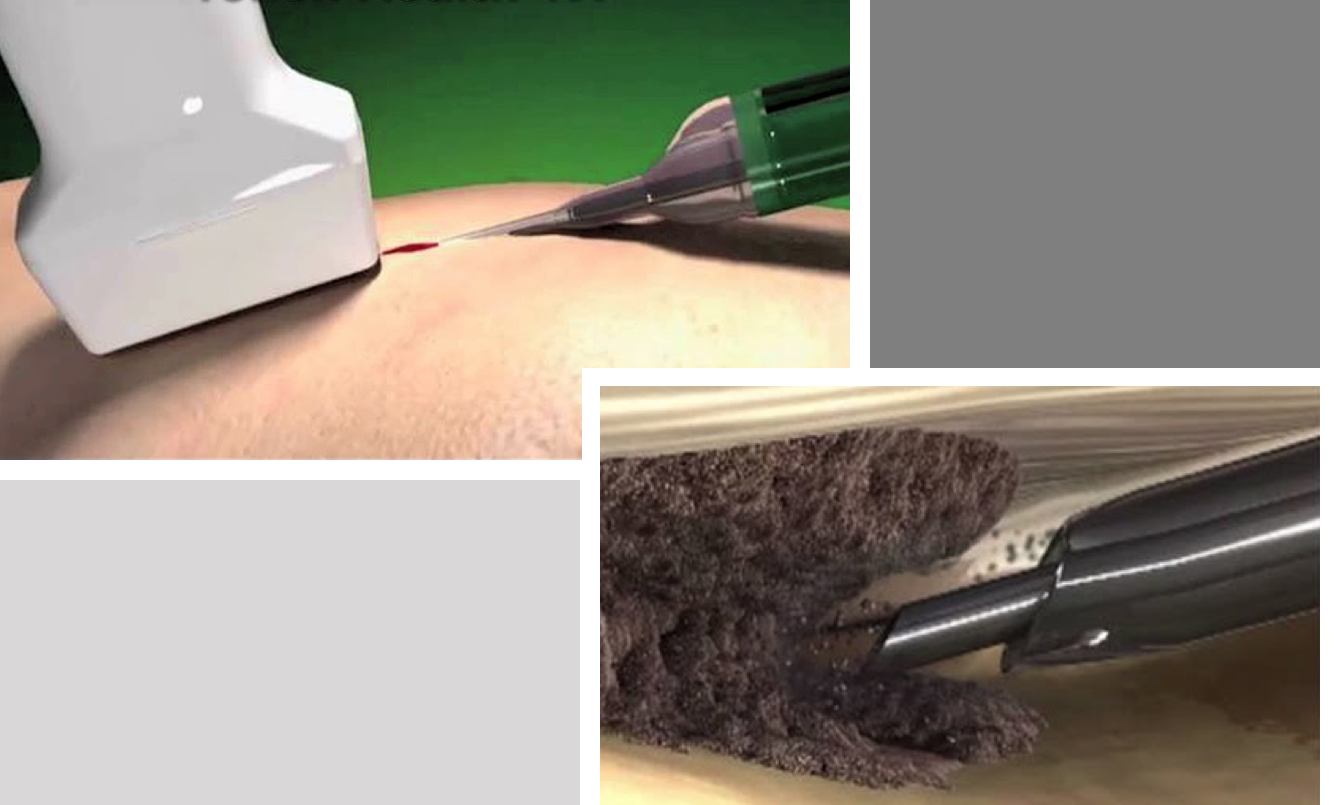
Today the same result is achieved without an open incision using Sonosurgery: a micro-procedure using ultrasound and tiny instruments, under local anaesthetic, with a small incision or none at all. The diseased tendon and vascular-nerve tissue that cause the symptoms are removed in about 30 minutes in total.
Advantages
- A tiny incision, or none.
- No general anaesthetic; painless under local.
- Can be done in hospital or in a well-equipped clinic.
- A definitive treatment without the problems of open surgery; usually no stitches.
- Faster recovery and return to activity.
- Lower cost than open or arthroscopic surgery.
Before the procedure
- You may eat up to two hours before.
- Continue your medication, except anti-inflammatories (stop three days before) and anticoagulants (only if your doctor agrees).
- Arrange not to drive home.
After the procedure
- Painkillers if needed; antibiotics only if you are at high risk of infection.
- A bandage on the elbow for 24–48 hours; gentle hand movement straight away.
- You can get the arm wet after 48–72 hours.
- Office work and driving in 24–48 hours.
- Physiotherapy isn’t essential but can speed recovery.
- Gradual return to demanding manual work and upper-limb sport after six weeks.
This information is for general guidance and does not replace a medical consultation. The right treatment is always decided individually, after clinical assessment.