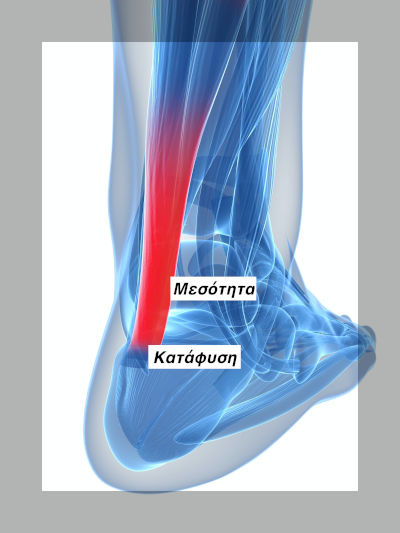
The Achilles can develop tendinopathy in two places: in its mid-portion, or lower down where it inserts into the heel. We therefore distinguish mid-portion from insertional tendinopathy. When tendinitis persists for weeks or months we call it tendinopathy: the tendon’s normal structure changes and its mechanical properties — and its ability to cope with walking or exercise — deteriorate.
Symptoms
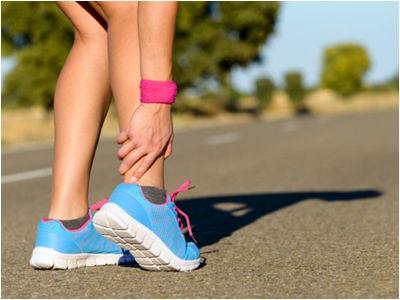
The main symptom is pain when the Achilles is asked to work during walking or exercise. Depending on the stage, pain may come on after activity and last for hours or days or — in more severe cases — during activity, stopping it. After getting up in the morning the tendon often feels stiff and stairs are difficult. The damaged area is tender to pressure and often visibly swollen. Pain forces many patients to cut back on or give up the sport they love — or affects even everyday walking.
What causes it?
There are many predisposing factors, but the two most important are overload (usually from exercise) and age (most common at 40–60). Other factors include foot anatomy, unsuitable footwear, genetics, injury, hormonal disorders, rheumatological disease and certain drugs (e.g. quinolone antibiotics).
Which sports?
Any sport involving running and jumping: running, basketball, volleyball, football and others. Swimming and cycling usually don’t worsen symptoms, and most people can keep fit that way.
Location and patients
Mid-portion tendinopathy is usually sport-related and affects younger people. Insertional tendinopathy occurs in both younger and older patients, due to tendon degeneration.
Conservative treatment
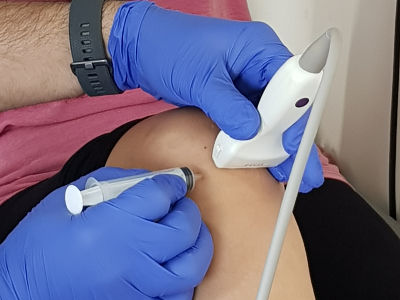
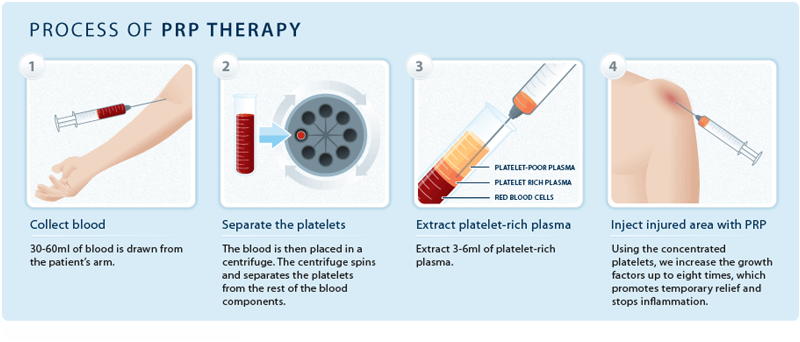
First: modifying and reducing activity, a heel raise, specific exercise, physiotherapy and ultrasound-guided injections (high-volume, electrolysis, PRP). Sometimes, despite correct treatment, conservative care fails because tendon tissue has limited capacity to heal.
When is surgery needed?
When conservative treatment has failed and daily life is seriously affected, or when the aim is to return to sport. Classic surgery removes the "damaged" part of the Achilles and repairs or reattaches it, sometimes with a graft from a neighbouring tendon. These are major operations, with immobilisation and no weight-bearing for several weeks and a recovery of many months.
Minimally invasive procedures
In many patients we can achieve results as good or better with much less invasive procedures. This has become clear over the last twenty years, mainly through the work of Professor Håkan Alfredson and his colleagues in Sweden. The main sources of pain were identified as the bursae at the insertion (normal structures that have acquired abnormal nerve supply) and, in the mid-portion, often a vestigial tendon — plantaris — rubbing against the Achilles.
The technique
- It is done in hospital as a day case; you go home a few hours later.
- Local anaesthetic around the incision is usually enough.
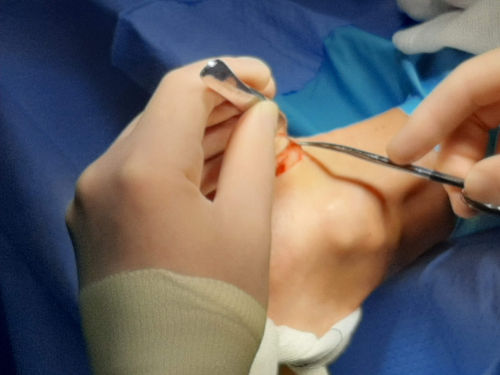
- One small incision (rarely two) is made over the problem.
- Abnormal bursae, troublesome bone spurs (e.g. Haglund’s) or part of the plantaris are removed. The Achilles itself is not injured; only its surface is cleared of visible diseased tissue.
- You leave the same day with a bandage (no cast), walking with crutches.
Advantages
- A small incision.
- The Achilles tendon is not injured.
- No general or epidural anaesthetic; painless under local.
- No hospital stay.
- An effective treatment.
- Much faster recovery, with no cast or immobilisation, because the tendon remains intact.
Before the procedure
- You may eat breakfast or a meal up to three hours before.
- Continue your usual medication, except:
- do not take anti-inflammatory painkillers for three days before;
- stop anticoagulants only if your doctor agrees.
- Bring two crutches (elbow crutches are best).
- Arrange not to drive home.
After the procedure
- You will be told which painkillers to take, if needed.
- Antibiotics only if you are at high risk of infection; possibly preventive anti-clotting treatment for a few days.
- You will walk almost immediately; crutches for 1–2 weeks.
- For the first few days keep the leg up when sitting and gently move the ankle.
- The surgeon changes the dressing after two days and explains wound care.
- After insertional surgery wear shoes open at the back (or wide and soft) until the stitches are out; after mid-portion surgery, any low shoes.
- Stitches out at 3 weeks; physiotherapy and exercise a few weeks later.
- Driving in 10–30 days (depending on the foot and the car).
- Office work in 2–3 days; physical work in 4–8 weeks.
- Gradual return to sport after six weeks; full participation in 3–4 months.
Your orthopaedic surgeon will explain whether you are a candidate for minimally invasive surgery.
References
- Masci L, Neal BS, Wynter Bee W, Spang C, Alfredson H. Achilles scraping and plantaris tendon removal improves pain and tendon structure in patients with mid-portion Achilles tendinopathy — a 24-month follow-up case series. J Clin Med 2021;10(12):2695.
- Bedi HS, Jowett C, Ristanis S, Docking S, Cook J. Plantaris excision and ventral paratendinous scraping for Achilles tendinopathy in an athletic population. Foot Ankle Int 2016;37(4):386–93.
- Alfredson H, Spang C. Surgical treatment of insertional Achilles tendinopathy: results after removal of the subcutaneous bursa alone — a case series. BMJ Open Sport Exerc Med 2020;6(1):e000769.
- Clinical presentation and surgical management of chronic Achilles tendon disorders — a retrospective observation on a set of consecutive patients operated by the same orthopaedic surgeon. Foot Ankle Surg 2018;24(6):490–4.
- Silbernagel KG, Malliaras P, de Vos RJ, et al. ICON 2020 — International Scientific Tendinopathy Symposium Consensus: a systematic review of outcome measures reported in clinical trials of Achilles tendinopathy. PMID 34797533.
This information is for general guidance and does not replace a medical consultation. The right treatment is always decided individually, after clinical assessment.